
When Britain was fringed by tropical seas
A team from the University of Bristol has shed new light on the creatures that inhabited the tropical seas surrounding Britain at the start of the age of the dinosaurs.
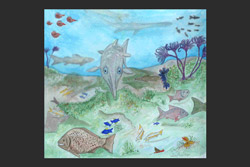
A team from the University of Bristol has shed new light on the creatures that inhabited the tropical seas surrounding Britain at the start of the age of the dinosaurs.
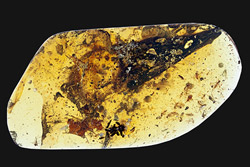
Two new specimens of tiny bird wings trapped in amber from rocks have been uncovered in China. The fossil wings seem to have come from baby birds that got trapped in the sticky sap of tropical trees 100 million years ago.
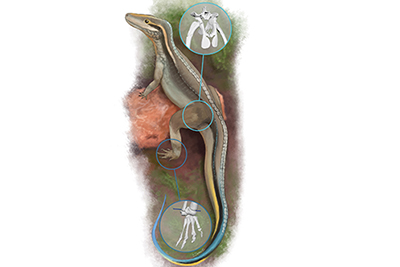
Scientists from the University of Bristol and the Royal Veterinary College (RVC) used three-dimensional computer modelling to investigate the hindlimb of Euparkeria capensis–a small reptile that lived in the Triassic Period 245 million years ago–and inferred that it had a “mosaic” of functions in locomotion.
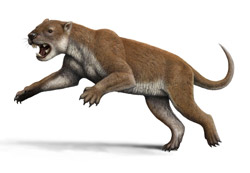
Scientists from the Universities of Bristol and Málaga have proposed that the long extinct marsupial lion hunted in a very unique way - by using its teeth to hold prey before dispatching them with its huge claws.
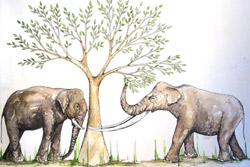
How can we ever know what ancient animals ate? For the first time, the changing diets of elephants in the last two million years in China have been reconstructed, using a technique based on analysis of the surface textures of their teeth.
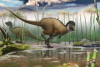
The first ever example of a plant-eating dinosaur with feathers and scales has been discovered in Russia. Previously only flesh-eating dinosaurs were known to have had feathers so this new find indicates that all dinosaurs could have been feathered.
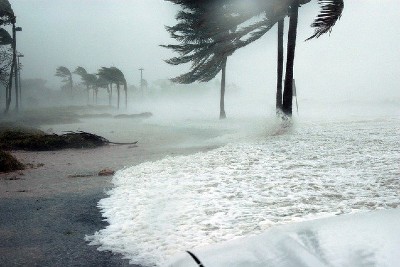
Global warming is dramatically increasing the risk of extreme hurricanes in the Caribbean, but meeting more ambitious climate change goals could up to halve the likelihood of such disasters in the region, according to new research.
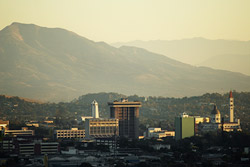
The build-up of magma six kilometres below El Salvador's Ilopango caldera means the capital city of San Salvador may be at risk from future eruptions, University of Bristol researchers have found.
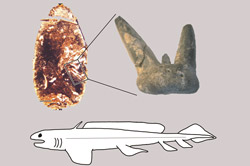
Scientists have discovered macabre fossil evidence suggesting that 300 million-year-old sharks ate their own young, as fossil faeces of adult Orthacanthus sharks contained the tiny teeth of juveniles.

The University of Bristol’s quest to prove its quizzing prowess begins on Monday, when they take on the Courtauld Institute of Art in the first round of the new series of University Challenge.