Research

All in the head? Brains adapt to support new species

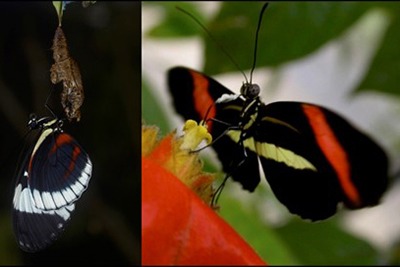
Scientists studying forest dwelling butterflies in Central and South America have discovered that changes in the way animals perceive and process information from their environment can support the emergence of new species. The study led by the University of Bristol, and published today [9 February] in the Proceedings of the National Academy of Sciences (PNAS), has implications for how new species might evolve and the underappreciated role of changes in the brain.
Brain’s connections which keep related memories distinct from each other, identified in new study

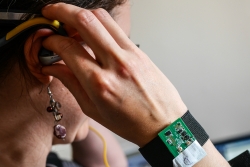
Neuroscientists at the University of Bristol are a step closer to understanding how the connections in our brain which control our episodic memory work in sync to make some memories stronger than others. The findings, published in Nature Neuroscience, reveal a previously unsuspected division of memory function in the pathways between two areas of the brain, and suggest that certain subnetworks within the brain work separately, to enhance the distinctiveness of memories.

New trial to assess whether rapid tests reduce antibiotic prescribing for respiratory infections in primary care

A new randomised controlled clinical trial, led by the University of Bristol, will investigate whether rapid microbiological 'point-of-care' tests for respiratory infections could reduce antibiotic prescribing in primary care, thanks to funding of £1.6 million by the National Institute for Health and Care Research (NIHR). The tests, which are carried out in GP surgeries rather than sent to a laboratory, detect the presence of viruses and some bacteria, with results available on the same day.