
Survey highlights trainee teachers' misconceptions about the brain
Many teachers appear to be leaving training college with serious misconceptions about how the brain functions, new research suggests.

Many teachers appear to be leaving training college with serious misconceptions about how the brain functions, new research suggests.

A grant worth around £380,000 has been awarded by the Arts and Humanities Research Council (AHRC) to Professor James Ladyman of the Department of Philosophy for a three-year project on The Foundations of Structuralism.

Professor Michael Benton in the Department of Earth Sciences reviews the history of modern diversity

Details of a fabulous new fossil bird from the world-famous fossil deposits of Liaoning in China, are published this week in the journal Science in China. Details of its bone structure and feathers are exquisitely preserved.

New research from the University of Bristol shows that admissions for the surgical treatment of dental abscess have doubled in the last ten years, with potentially life-threatening consequences for patients.

Tiny minerals found inside diamonds have provided us with a rare glimpse of the Earth’s deepest secrets. This exciting new research by a team of scientists, led by the University of Bristol, is reported today (30 July) in Nature.
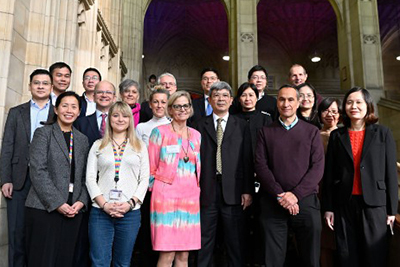
A new collaborative initiative between UK universities and countries worldwide to share cutting-edge vaccine technology to prevent future global outbreaks of infectious diseases has been awarded £10.5 million from the Department of Health & Social Care (DHSC) and the Engineering and Physical Sciences Research Council (EPSRC).

Being taller during the course of a person’s lifetime could protect against heart disease and stroke in later life, according to a new University of Bristol-led study. The research, which analysed height and genetic data on over 454,000 individuals, is published in the pre-print publication* medRxiv.

Dr Kazem Alemzadeh has invented a Dental Robotic Testing Simulator called ‘Dento-Munch’ that can replicate human chewing.

The widely held belief that the Nile valley was the most likely route out of sub-Saharan Africa for early modern humans 120,000 year ago is challenged in a paper published this week.