
Research reveals why next-generation engine noise grinds our gears
A breakthrough study has revealed why emerging electric aircraft engine technology sounds so annoying — and how to fix it.
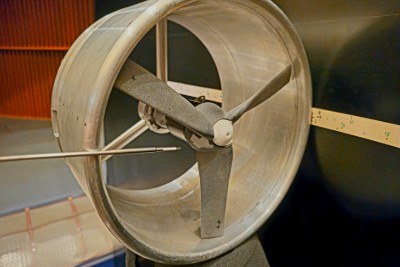
A breakthrough study has revealed why emerging electric aircraft engine technology sounds so annoying — and how to fix it.

Three academics in the Faculty of Medical and Veterinary Sciences have received prestigious Investigator Awards from the Wellcome Trust.

The east sides of major UK cities such as London and Manchester have historically been the poorest due to industrial pollution. This has resulted in unequal distribution of social classes across cities that is still evident today.
Research using data collected from around 4,000 healthy people in the UK has enabled scientists to identify a rare genetic variant that dramatically reduces levels of certain types of lipids in the blood.

Scientists inspired by the octopus’s nervous system have developed a robot that can decide how to move or grip objects by sensing its environment.

More than 100 school shirts emblazoned with compelling messages capturing children and young people’s feelings about knife crime are set to be publicly exhibited to mark the start of national Knife Crime Awareness Week.

Researchers have found evidence that genetic factors may contribute to the development of language during infancy.

Researchers from the University of Bristol have contributed to a national report on police forces’ understanding of honour-based violence (HBV), forced marriage (FM) and female genital mutilation (FGM).
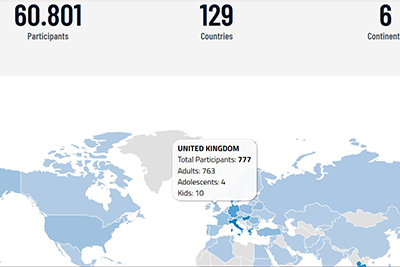
The COH-FIT project is currently the largest survey worldwide on the health impact of COVID-19 and is endorsed by the World Psychiatric Association. The study aims to identify risk and protective factors for physical and mental health problems and to guide strategies for remedying these problems. The COH-FIT project involves 200 researchers from 35 countries, including Bristol, aims to help scientists understand how different countries have been affected by the pandemic.
Scientists are trained to carefully assess theories by designing good experiments and building on existing knowledge. But there is growing concern that too many research findings may be wrong.