
A sheep’s early life experiences can shape behaviour in later life
New research has found that a sheep’s experiences soon after birth can shape its later behaviour and also that of its offspring.
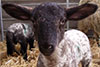
New research has found that a sheep’s experiences soon after birth can shape its later behaviour and also that of its offspring.
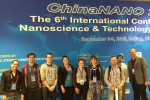
Students and staff from the Bristol Centre for Functional Nanomaterials (BCFN) travelled to China recently to attend a conference in Beijing and two symposiums at the universities of Tsinghua and Jilin.

A University of Bristol academic has been elected a Fellow of the world’s largest and most prestigious professional association for the advancement of technology.

Bristol scientists have received nearly £8 million in funding from Cancer Research UK – the biggest ever research grant awarded by the charity in the city.

It has long been argued that women are under-represented and marginalised in relation to men in the world’s news media. New research, using artificial intelligence (AI), has analysed over two million articles to find out how gender is represented in online news. The study, which is the largest undertaken to date, found men’s views and voices are represented more in online news than women’s.

Students from the United States are spending a month in Bristol as part of the third annual Fulbright Summer Institute. The programme has been so successful that it has been extended by a further year, and the University will welcome ten more Fulbright students in summer 2016.

New research, led by academics in the University’s School of Clinical Sciences, has shown human neural stem cells could improve blood flow in critical limb ischemia through the growth of new vessels.

Can fake earthquakes help safeguard nuclear reactors against natural disasters? Visitors to this year's Royal Society Summer Science Exhibition will be given the opportunity to find out for themselves thanks to research from the University of Bristol, in collaboration with EDF Energy.

People who have a certain type of bacteria in their guts may be at greater risk of developing bowel cancer. The findings will be presented by University of Bristol researcher, Dr Kaitlin Wade, at the 2019 NCRI Cancer Conference in Glasgow today [Monday 4 November].

Current chip technology used for purchasing items via credit and debit cards in shops was developed in the mid-1990s. EMVCo, the standard body which manages, maintains and advances EMV Specifications, is in the process of designing the next generation payment technology to meet long-term industry requirements. The activity will establish a common, robust technology platform for supporting contact and contactless/mobile interfaces for both online and offline transactions.