
Subjects receive high student satisfaction in the National Student Survey
The University of Bristol has achieved some significant successes in the 2017 National Student Survey (NSS), scoring highly in many subject areas.
The University of Bristol has achieved some significant successes in the 2017 National Student Survey (NSS), scoring highly in many subject areas.
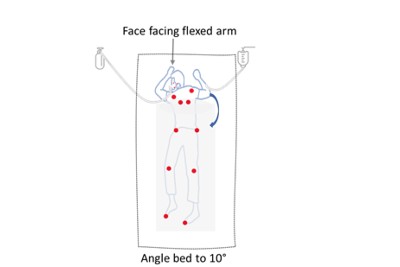
A new protocol for prone positioning — a technique commonly used to treat COVID-19 patients in respiratory distress by turning them on to their front to increase oxygen flow to the lungs, is published in the Journal of Frailty and Aging. Researchers from the University of Bristol in collaboration with clinicians at the Royal United Hospital in Bath, conducted a literature review of the manoeuvre to develop a standard protocol for the adjuvant treatment that can be used for COVID-19 patients at high risk of dying being treated in normal hospital wards.
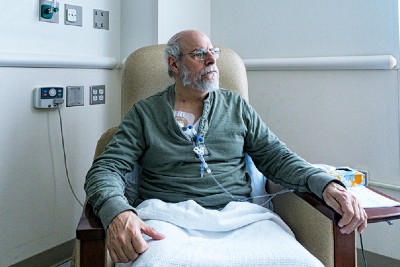
A research team led by the MRC Centre for Neuropsychiatric Genetics and Genomics (MRC CNGG) at Cardiff University and involving researchers from the University of Bristol has received significant funding for an international collaborative project to study the link between physical and mental health problems.
The NIHR has reaffirmed its commitment to public health research by awarding a third round of funding to the NIHR School for Public Health Research (SPHR).

Exposure to traffic-related air pollution is associated with increased mental health service-use among people recently diagnosed with psychotic and mood disorders such as schizophrenia and depression, a study on data from over 13,000 people has found.
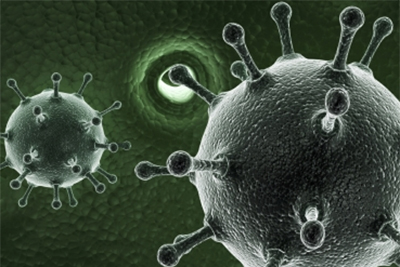
Pakistan has one of the highest rates of hepatitis C virus (HCV) infection in the world, accounting for over ten per cent of global HCV infections. A new modelling study led by the University of Bristol, UK, suggests that achieving the World Health Organization goal of eliminating HCV as a public health problem by 2030 in Pakistan is likely to be highly cost-effective by 2030, cost-saving by 2031, and could deliver US$9.10 billion in savings to the Pakistan national economy by 2050.

For over 25 years, Children of the 90s at the University of Bristol has been charting the lives of 14,5000 people born in the early 1990s in the greater Bristol area. Thanks to the amazing commitment of these research volunteers, scientists have made important discoveries that are helping treat and prevent ill health around the world.
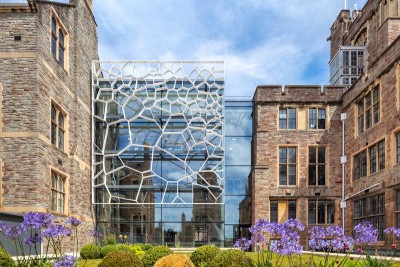
The University of Bristol is among the best places in the country to study Engineering, Education and Medicine.
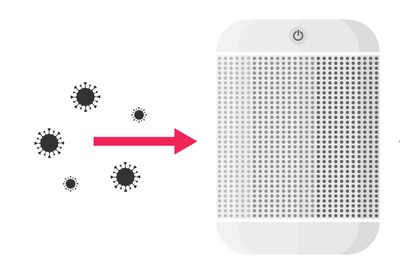
A major new randomised controlled trial will investigate the effectiveness of air filtration systems in preventing respiratory infections (such as coughs, colds and flu) and COVID-19 among care home residents in England. The AFRI-c (Air Filters to Prevent Respiratory Infections including COVID-19 in Care Homes) study, which received funding from the National Institute for Health Research (NIHR), is led by researchers at the University of Bristol.
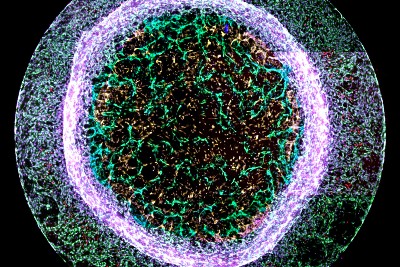
A scientist from the University of Bristol has won the British Heart Foundation’s (BHF) annual ‘Reflections of Research’ image competition. Where science and art collide, the competition challenges BHF-funded scientists to showcase their state-of-the-art heart and circulatory disease research through the generation of captivating images.