
Public engagement committee
The Committee reps act as a single point of contact for all public engagement matters for the cohort: they have the contacts, the expertise and (perhaps most importantly) the funds to support and facilitate activities for the wider student body.
Gökhan Sancak (2022 cohort)
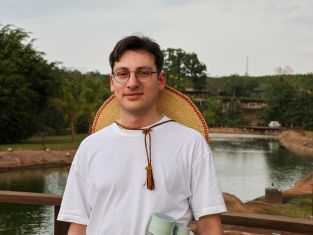
What did you study prior to joining the CoSEM CDT and why?
I began my academic journey as a military student at the Turkish Air Force Academy in 2014, where I received both military and engineering training for two years. I then continued my studies in Aeronautical Engineering at Istanbul Technical University, completing my degree there in 2019. Aviation, particularly military aviation, has always fascinated me. Over time, I became drawn to the engineering side of aviation and space, which shaped the direction of my career and inspired my curiosity in advanced materials and structures used in aerospace applications.
What made you choose a PhD in Advanced Composites?
When I discovered the Advanced Composites PhD programme, I immediately felt it was the right opportunity to return to academia after a break. The programme offered the perfect environment to refresh my knowledge, gain new skills, and grow through hands-on experience. It opened a door to the kind of learning and research atmosphere I had been looking for for a long time.
Why is it important research students actively communicate their research to the public?
I believe that as researchers, our goal should not be limited to answering our own questions. As social beings, we also need to nurture the questioning and thought-provoking side of communication. Public engagement strengthens this mutual exchange and allows us not only to share our knowledge but also to be challenged, to rethink, and to grow through dialogue. I also see it as a vital way to inspire young minds and raise awareness about the importance of research in shaping our future.
How do you think we can make composites more accessible to the general public?
When we think about future generations, ensuring the sustainability of the composites sector through continuous research, innovation, and education, becomes essential. I also believe that by developing more efficient and cost-effective manufacturing processes, we can make composite technologies more accessible to the public. Increasing the public awareness of how composites contribute to sustainability and everyday applications can help people see their relevance beyond the lab.
What do you hope to achieve as a Public Engagement Committee rep?
I hope that my involvement in public engagements will contribute meaningfully to my research, both in terms of content and purpose. At the same time, I aim that the research project we carry out at BCI will inspire and guide some of the individuals we interact with, helping them in their future studies and research journeys.
Cyril Varghese Thankachen (2023 cohort)
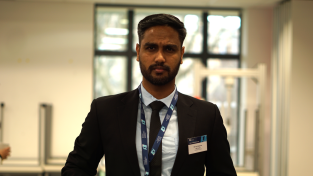
What did you study prior to joining the CoSEM CDT and why?
Ever since I was a child, my interest in aeroplanes began with trips to the airport to pick up my dad when he returned from working abroad. Those early experiences sparked a curiosity about aviation, and I soon knew that I wanted to study something related to aircraft. In school, I realised that engineering was the path that would allow me to understand — and eventually contribute to — the design and fabrication of these incredible machines.
Before joining the CoSEM CDT, I completed a Master of Transport Engineering (Vehicle Engineering – Aerospace & Automotive) at Kaunas University of Technology and a Bachelor of Engineering (Honours) in Aerospace Technology from Emirates Aviation University, jointly awarded by Coventry University.
Throughout my studies, I was drawn to the mechanics behind high-performance structures — from aircraft propulsion systems to composite airframes — and developed a strong interest in how materials behave under extreme conditions. My postgraduate research on composite impact damage, along with my experience in aircraft technical services, strengthened this curiosity and motivated me to pursue advanced research in composite materials.
What made you choose a PhD in Advanced Composites?
The rapid shift toward composite materials in the aerospace industry became evident to me during my undergraduate studies at Emirates Aviation University. Each year, major Gulf-based airlines announced large aircraft orders, and a recurring theme was the increasing proportion of composite materials used in these airframes. Being part of a university affiliated with Emirates Airlines — the world’s largest operator of the Airbus A380 — further deepened my appreciation for advanced composites. Flying on such an engineering marvel made the significance of these materials even more tangible.
I quickly recognised that the industry’s trajectory was moving toward high-performance, non-metallic materials. As a result, I directed most of my university projects toward gaining experience in this field. When I decided to pursue a PhD, Advanced Composites was the natural choice, as I already had a strong foundation and a clear understanding of the research challenges involved. Discovering that the University of Bristol offered a dedicated programme focused exclusively on composite materials made the decision straightforward.
Why is it important research students actively communicate their research to the public?
Communicating research to the public is important because it helps bridge the gap between complex scientific work and the people who ultimately benefit from it. Many areas of engineering can seem distant or technical, but they have a direct impact on everyday safety, sustainability, and technological progress. When researchers take the time to explain what they do, it builds trust, increases transparency, and helps people understand why certain types of research matter.
For me, public engagement is also about accessibility. I believe that research shouldn’t be something that exists only in labs or academic papers — it should be shared in a way that sparks curiosity in younger audiences, encourages more students to pursue STEM, and ensures that society feels connected to scientific development. When we explain our work clearly, we make research more inclusive, more understandable, and more relevant to the wider community.
How do you think we can make composites more accessible to the general public?
I think composites become far more accessible when people can relate them to things they already recognise. Most people don’t naturally think about fibre architectures or ceramic matrices, but they do understand planes, bikes, sports gear, or even wind turbines. So instead of presenting composites as a technical subject, we can start by showing how these materials quietly support everyday life — from helping an aircraft fly more efficiently to making a cricket bat lighter and stronger. Once people see composites in familiar places, the subject stops feeling distant or overly scientific.
For me, the biggest shift comes from how we communicate. Using simpler language, everyday analogies, and even a bit of storytelling can make a huge difference. If I can explain a strength-to-weight ratio using a suitcase analogy, or creep behaviour using something like stretching a rubber band slowly over time, it immediately becomes more understandable.
I also think practical experiences help enormously. Hands-on workshops, school visits, public demos, or short behind-the-scenes videos showing how composites are manufactured — these make the field feel real rather than abstract. When someone actually sees fibres being laid up or watches a simple mechanical test, the science becomes far more approachable.
Ultimately, people connect with purpose. If we communicate not just what composites are, but why they matter — cleaner aviation, safer transportation, lighter vehicles, sustainable materials — then the public naturally becomes more interested. When the impact is clear, the science becomes easier to engage with.
What do you hope to achieve as a Public Engagement Committee rep?
As a Public Engagement rep, I really want to help make engineering — and especially composites — feel less intimidating and more welcoming to everyone. I’ve realised through my own journey that many people are interested in how things work, but they sometimes hesitate because the language around engineering can feel too technical or exclusive. If I can help break down that barrier even a little, I’d consider that a success.
I also hope to highlight the human side of research. Behind every experiment or simulation, there’s a person - learning, struggling, improving, and trying to make something a little better than it was before. Sharing that story is just as important as sharing the science.
Another goal for me is to inspire younger students — especially those who may not see themselves represented in engineering — to feel that this field is within their reach. If someone hears about composites for the first time through an outreach event or a conversation and thinks, “That sounds interesting… maybe I could do this,” then I’ve done my job.
Ultimately, I want to create a sense of curiosity and connection between our research community and the wider public. If people walk away feeling a little more informed, a little more inspired, or simply more comfortable asking questions about science and engineering, that’s exactly what I hope to achieve.