
Reflections on the Launch of the Centre for Childhoods & Social Justice
22nd December 2025
By Dr Gözde Doğanyılmaz-Burger, Senior Research Associate, School for Policy Studies
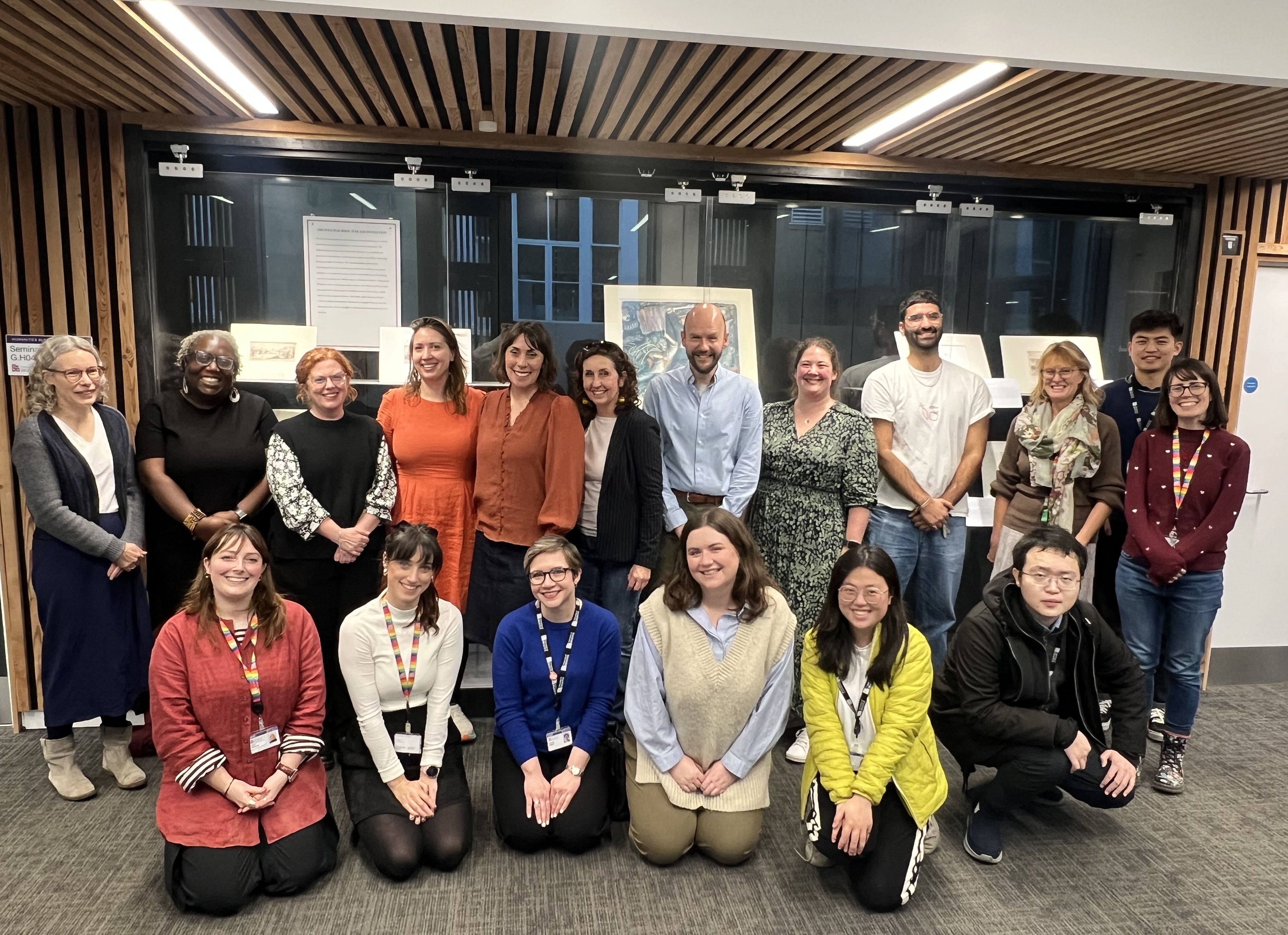
Attending the launch of the Centre for Childhoods & Social Justice felt both celebratory and grounding. After many months of working closely with Dr Victoria Sharley and Dr Tim Fowler on the organising committee of the International Child and Family Conference 2025, it was especially meaningful to be there - both to support colleagues and to celebrate the beginning of a new institutional home for work grounded in shared questions and values. It was a genuine pleasure to see something they have invested immense care, time, and commitment in come to fruition as a Centre.
From the outset, the atmosphere reflected what this Centre stands for: openness, collaboration, and ambition. Prof Esther Dermott, Faculty Pro Vice-Chancellor for Social Sciences and Law, spoke about how the Centre sits within the wider research landscape of the University of Bristol and the Faculty’s vision to invest strategically in distinctive, high-quality research areas. What stood out to me was the emphasis on interdisciplinarity and on addressing large, complex questions that cannot be contained within single disciplines. The fact that the Centre has already confirmed its first international visiting partner speaks to the momentum and confidence behind this initiative.
As a researcher whose work sits at the intersection of childhood studies, social justice, and family policy, I was particularly struck by how clearly the Centre’s values were articulated. Dr Victoria Sharley, Co-Director of the Centre, described a vision that places children and young people firmly at the centre, not as passive recipients of adult decisions, but as active participants whose voices, experiences, and priorities matter. The commitment to co-designing research with children and young people, and to working closely with policymakers, practitioners, and communities, reflects a genuinely engaged and responsive approach to research.
The breadth of expertise brought together through the Centre is impressive. With members spanning the School for Policy Studies, SPAIS, Education, Law, History, English, Anthropology, and beyond, the Centre already embodies the cross-faculty collaboration it seeks to foster. This diversity is not just disciplinary, but methodological and conceptual too, creating space for different ways of knowing, researching, and working with children and young people.
Dr Tim Fowler, Co-Director, outlined the Centre’s key research streams, which together capture the complexity of contemporary childhoods: children’s rights, wellbeing, inequalities, child and youth cultures, and welfare, care, and protection. What resonated with me was how these streams speak both to enduring questions, such as what constitutes a “good childhood”, and urgent present-day challenges shaped by social, digital, economic, and political change.
Beyond research themes, the Centre’s priorities around research culture felt particularly important. Plans to support collaborative funding bids, build national and international reputation, strengthen policy and practitioner engagement, and develop a positive, inclusive research environment signal a Centre that is as much about how we work together as what we study. The forthcoming Research Practice Network and PGR network promise valuable spaces for dialogue, bottom-up agenda setting, and support for early-career and postgraduate researchers.
One of the most encouraging aspects of the launch was its openness. With around forty members from across the University in attendance, the event reflected the Centre’s inclusive ethos. Importantly, the Centre is open not only to academics, but also to postgraduate researchers, undergraduate students, professional services colleagues, and those working beyond the Faculty and the University. Anyone interested in childhoods and social justice is warmly welcomed to engage with the Centre’s events and activities.
For me, this launch marked more than the beginning of a new Centre. It signalled a shared commitment to taking children seriously in research, in policy, and in practice, and to doing so collaboratively, critically, and with care. I very much look forward to being part of the conversations, initiatives, and partnerships that will grow from this space.
This feels like a Centre with real potential to shape research agendas, influence policy, and build a supportive community, and it’s exciting to see where it will go next.
If you are interested in getting involved:
- Follow the Centre on LinkedIn: Centre for Childhoods & Social Justice
- Get in touch and sign up: csj-centre@bristol.ac.uk
- Find out more: Visit the Centre’s website