
Professor Woolfson awarded Humboldt Research Prize
BBI Director Professor Dek Woolfson has received the prestigious Humboldt Research Award.
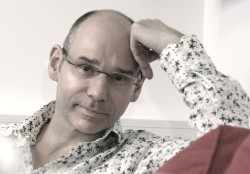
BBI Director Professor Dek Woolfson has received the prestigious Humboldt Research Award.

Sarah Marshall, an Events Officer in the University’s Development and Alumni Relations Office, will be taking part in an epic fitness challenge on 7 and 8 May 2016 to raise vital funds for local charity, the Capella Foundation.
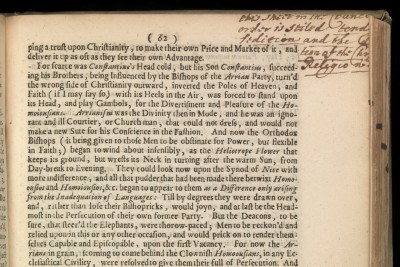
Andrew Marvell’s poetry is best known for discouraging the crime of coyness in courtship, but new research led by the University of Bristol has uncovered compelling evidence that the famous poet, celebrated in the eighteenth century as a politician and satirist, had his own illicit liaisons as a spy for the Dutch.
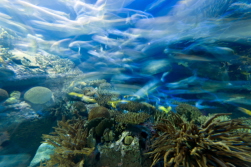
Scientists have discovered a ‘bizarre’ microorganism which plays a key role in the food web of Earth’s oceans.
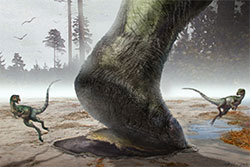
An international team of scientists, led by the China University of Geosciences in Beijing and including palaeontologists from the University of Bristol, has shed new light on some unusual dinosaur tracks from northern China. The tracks appear to have been made by four-legged sauropod dinosaurs yet only two of their feet have left prints behind.

New light has been shed on the genetic relationship between autistic spectrum disorders (ASD) and ASD-related traits in the wider population, by a team of international researchers including academics from the University of Bristol, the Broad Institute of Harvard and MIT, and Massachusetts General Hospital (MGH).
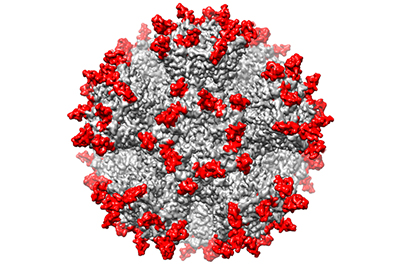
The University of Bristol and spin-out company Imophoron have announced they are ready to test COVID-19 vaccine candidates in a pre-clinical programme.
Ninety-seven per cent of climate scientists agree global warming is caused by people, a new study by an international team of researchers, including Professor Stephan Lewandowsky of the University of Bristol, has confirmed.
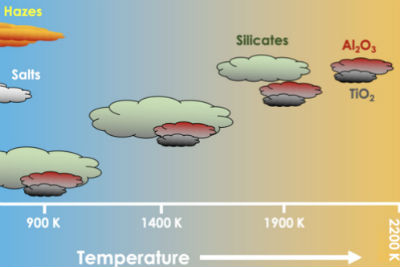
Giant planets in our solar system and circling other stars have exotic clouds unlike anything on Earth, and the gas giants orbiting close to their stars — so called hot Jupiters — boast the most extreme.

With the coronavirus pandemic leading to people across the nation being confined to their homes, experts at the University of Bristol have created some guidance to keep people active.