
News: Coronavirus

New study of 46-million adults in England confirms blood clot risk with COVID-19 vaccine is very small

The risk of blood clots after COVID-19 vaccinations is very low finds a new study of 46-million adults in England. The research, which involved University of Bristol academics, showed that people vaccinated with Oxford-AstraZeneca or Pfizer-BioNTech had a lower risk of all venous clots (such as deep vein thrombosis and pulmonary embolism) and all arterial clots (such as strokes and heart attacks), particularly in people over 70 years.

Novel host cell pathway hijacked during COVID-19 infection uncovered by Bristol researchers

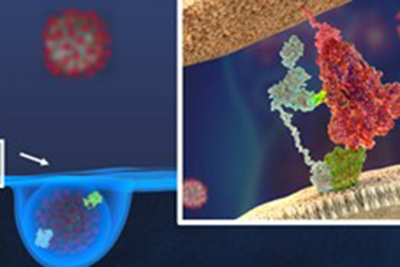
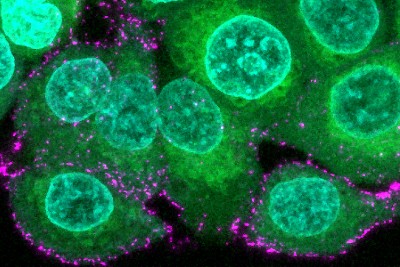
An international team of scientists, led by the University of Bristol, has been investigating how the SARS-CoV-2 virus, the coronavirus responsible for the COVID-19 pandemic, manipulates host proteins to penetrate into human cells. After identifying Neuropilin-1 (NRP1) as a host factor for SARS-CoV-2 infection, new findings published in the journal of the Proceedings of the National Academy of Sciences (PNAS) today [14 June] describe how the coronavirus subverts a host cell pathway in order to infect human cells.

SARS-CoV-2 Spike protein binds to heart’s vascular cells potentially contributing to severe microvascular damage

A new study has shown how SARS-CoV-2 may contribute to severe microvascular damage seen in severely-ill COVID-19 patients by transforming human heart vascular cells into inflammatory cells, without infecting them. The University of Bristol-led research, published in Clinical Science, indicates blocking antibodies could represent a new treatment to alleviate cardiovascular complications.

Amounts of aerosol from vigorous exercise and conversational speaking are similar, finds first study to examine exhaled aerosol emission rates during exercise

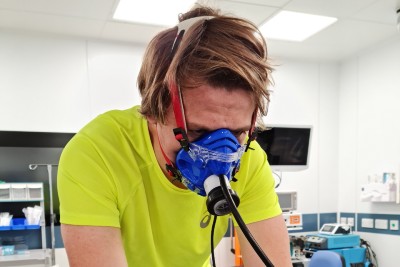
Vigorous exercise does not produce significantly more respiratory particles than speaking, but high-intensity exercise does, finds new University of Bristol-led research. The study, published in Communications Medicine, is the first to measure exhaled aerosols generated during exercise, to help inform the risk of airborne viral transmission of SARS-CoV-2 for indoor exercise facilities and sporting and physical group activities.