
How marine life is responding to ocean acidification
A new study by researchers at the University of Bristol and Plymouth Marine Laboratory has shed light on how different species of marine organisms are reacting to ocean acidification.

A new study by researchers at the University of Bristol and Plymouth Marine Laboratory has shed light on how different species of marine organisms are reacting to ocean acidification.
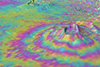
Little known volcanoes in one of Africa’s most stunning locations are to be explored in a bid to understand the threat they pose to life, livelihood and the landscape. Researchers are to assess largely uncharted volcanoes in the East African Rift Valley, home to vast mammal migrations, mountain gorillas, spectacular peaks and fertile plains.

New research has revealed the hidden past of crocodiles, showing for the first time how these fierce reptiles evolved and survived in a dinosaur dominated world.

The Bristol Dinosaur Project, which is based in the University of Bristol’s School of Earth Sciences, has reached the finals of The National Lottery Awards 2013.

The chamber of molten rock beneath Santorini’s volcano expanded 10-20 million cubic metres – up to 15 times the size of London’s Olympic Stadium – between January 2011 and April 2012, according to a new survey carried out by an international team led by Oxford University and including a scientist from the University of Bristol. The research is reported in this week’s Nature Geoscience.

Ghostly tales, dinosaur bones and rare books are just some of the fascinating treasures from the vaults of the University of Bristol which will be shown to the public as part of the Museums at Night initiative – an annual late night festival of art, culture and heritage.

Members of the Intergovernmental Panel on Climate Change (IPCC) Working Group II will publish their first update in seven years on the scale of impacts, adaptations and vulnerabilities to climate change at a meeting in Yokohama, Japan today.

Michael Benton, Professor of Vertebrate Palaeontology in the School of Earth Sciences, has achieved the rare distinction of being elected Fellow of the world's most eminent and oldest scientific academy in continuous existence: the Royal Society.

Using information gathered from field-based studies at the Kima’Kho tuya, an extinct subglacial volcano in northern British Columbia, Canada, researchers from the University of British Columbia, Dickinson College and the University of Bristol report how they have determined palaeo icesheet thickness.
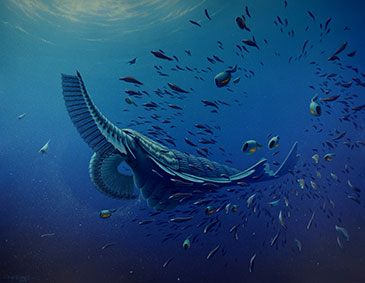
Ancient, giant marine animals used bizarre facial appendages to filter food from the ocean, according to new fossils discovered in northern Greenland. The new study, led by the University of Bristol and published today in Nature, describes how the strange species, called Tamisiocaris, used these huge, specialized appendages to filter plankton, similar to the way modern blue whales feed today.