
New Director for Cabot Institute for the Environment
The University of Bristol’s Cabot Institute for the Environment has appointed a new Director.
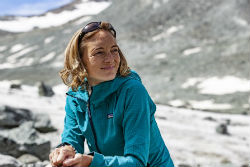
The University of Bristol’s Cabot Institute for the Environment has appointed a new Director.

Three researchers from the University of Bristol have been awarded European Research Council (ERC) Advanced Grants totalling around €8 million. This places the University third in the UK in terms of the number of Advanced Grants awarded from the 2021 call.
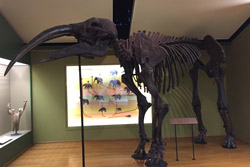
A new study, led by scientists at the Institute of Vertebrate Paleontology and Paleoanthropology (IVPP) in Beijing, China, including University of Bristol PhD student Zhang Hanwen, examined the feeding habits of ancient elephant relatives that inhabited Central Asia some 17 million years ago.
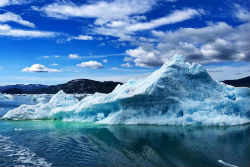
A new study carried out by an international team of researchers, using the chemistry of ocean sediments has highlighted a widespread picture of Atlantic circulation changes associated with rapid climate change in the past.
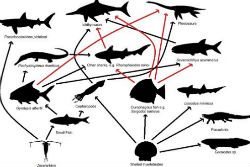
Aust Cliff near Bristol has been known as a rich fossil site since the 1820s. Since then, thousands of people have visited this spectacular location on the banks of the Severn, and collected fossils of ancient sharks and sea dragons.
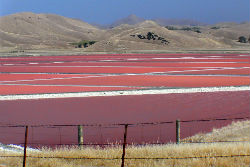
A new study led by scientists from the University of Bristol has used a combination of genomic and fossil data to explain the history of life on Earth, from its origin to the present day.
The University of Bristol has appointed a new Dean for the Faculty of Science.
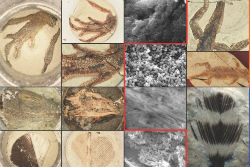
A newly published experimental protocol, involving University of Bristol scientists, could change the way fossilisation is studied.
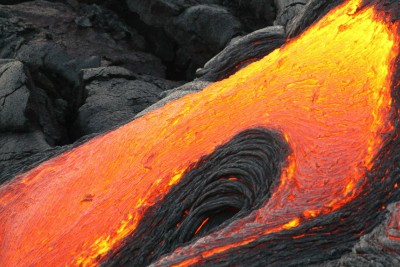
Unlike the classic Jules Verne science fiction novel Journey to the Center of the Earth or movie The Core, humans cannot venture into the Earth’s interior beyond a few kilometres of its surface. But thanks to latest advances in computer modelling, an international team of researchers led by the University of Bristol has shed new light on the properties and behaviour of magma found several hundreds of kilometres deep within the Earth.
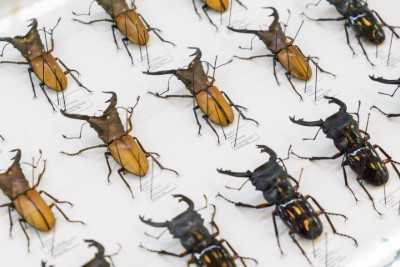
Researchers at the University of Bristol have found that beetles first roamed the world in the Carboniferous and later diversified alongside the earliest dinosaurs during the Triassic and Jurassic.