
Robotic food helps scientists understand predators
Dr Christos Ioannou at the University of Bristol has been awarded a five year research fellowship by NERC for the study of predator-prey relationships, using robotic prey to lure predatory fish.

Dr Christos Ioannou at the University of Bristol has been awarded a five year research fellowship by NERC for the study of predator-prey relationships, using robotic prey to lure predatory fish.

New research that looked at whether two commonly prescribed statin medicines, used to lower low-density lipoprotein (LDL) or ‘bad cholesterol’ levels in the blood, can adversely affect cognitive function has found that one of the drugs tested caused memory impairment in rats.

Giant plankton-eating animals first filled the prehistoric seas more than 160 million years ago but they were wiped out in the same event that killed off the dinosaurs, and then replaced by plankton-eating sharks and whales. The question is: just how big did these giant fishes get? New research from the University of Bristol suggests between 12 and16m long.
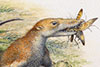
New analyses of tiny fossil mammals from South Wales are shedding light on the function and diets of our earliest ancestors, a team led by researchers from the Universities of Bristol and Leicester report today in the journal Nature.

What makes enzymes such fantastic catalysts? New research from the University of Bristol is significantly advancing our understanding of how these proteins increase the rate of chemical reaction.

A previously unknown canyon hidden beneath two kilometres of ice covering Greenland has been discovered by a group of scientists, led by a team from the University of Bristol.

University freshers struggle to remember basic concepts from their A-level studies, according to new research.

New research shows that almost one in three children born prematurely (before 37 weeks) have lower Key Stage 1 (KS1) test results than children who are born at full term (37-42 weeks) and more than a third have special educational needs (SEN).

Two postgraduates among the first intake on the Vet School’s MSc in Global Wildlife Health and Conservation have recently returned from a successful visit to Western Australia.

For decades, it was thought that our skeleton and all its characteristic bony tissues originated in the predators, known as ‘conodonts’. However new research, led by the University of Bristol and published today in Nature, shows that they were evolutionary copy-cats who evolved tooth-like structures and tissues independently of other vertebrates. The origin of our skeleton is to be found in the armour of our mud-slurping ancestors who evolved bony armour to protect themselves from such predators.