
Beyond phonics - the case for teaching children the logic of the English spelling system
Why is there the letter 'g' in sign? Why not spell the word 'does' duz?
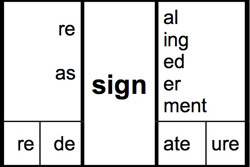
Why is there the letter 'g' in sign? Why not spell the word 'does' duz?

Thyroid hormones have important and diverse roles in human health and regulate metabolic rate. Thyroid disease is common (affecting 5-10 per cent of the population) and synthetic thyroid hormones are one of the commonest drug therapies prescribed worldwide. A new study, published in Nature Communications involving University of Bristol academics, reports a new gene called SYN2 associated with thyroid levels.

Eavesdrop on crocodiles, churn butter in a Roman kitchen and explore Earth before the dinosaurs lived on it — just some of the exciting activities that members of the public can experience during Research without Borders, the University of Bristol’s free public festival of postgraduate research, which includes a day-long showcase at Colston Hall on 15 May.

Gigantic polar clouds of hydrogen cyanide roughly four times the area of the UK are part of the impressive atmospheric diversity of Titan, the largest moon of Saturn, a new study led by Leiden Observatory, the Netherlands Institute for Space Research and the University of Bristol has found. The research is published today in Nature.

The Astrophysics Group in the University of Bristol's School of Physics has received a grant from the UK Space Agency to further develop the data-handling software authored by Dr Mark Taylor to access the data from the Gaia mission.

What will Bristol be like in 2070? A new report released today [1 October] suggests a number of ideas in an attempt to create a futuristic city that suits the needs of its citizens, whatever their age.
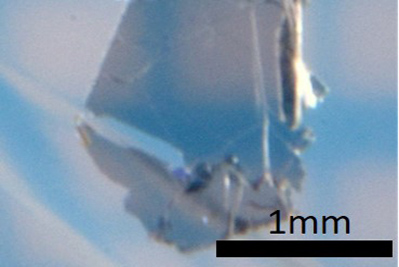
Researchers at the University of Bristol have successfully demonstrated the high thermal conductivity of a new material, paving the way for safer and more efficient electronic devices – including mobile phones, radars and even electric cars.

Disabled people in the UK face a variety of barriers to equality including poverty, poor access to health services, unequal access to the law and poor support services in everyday, family and higher educational settings, as shown by previous research. A new three-year study has been awarded £1.4 million from the ESRC to understand what is needed to tackle these barriers and develop strategies to overcome them.

An international research team from the University of Bristol, the Max Planck Institute for Physics of Complex Systems and the US Geological Survey have developed mathematical tools that can estimate which species are most influential in a food web.

Scientists at the Universities of Bristol, Leeds, Sheffield and Aberystwyth have been awarded over £3 million by the UK Natural Environment Research Council (NERC) for research into factors influencing the accelerated melting of the Greenland Ice Sheet.