
Bumps, blips and bulges: why do things localise?
Localised events do not always require localised causes argues Professor Alan Champneys, Head of the Engineering Mathematics Department.

Localised events do not always require localised causes argues Professor Alan Champneys, Head of the Engineering Mathematics Department.

David Gunnell, Professor of Epidemiology in the Department of Social Medicine, is advising Britain's Medicine and Healthcare products Regulatory Agency on a large study looking at the possible links between some types of antidepressant and suicide.

Cases of Prolonged Grief Disorder among people bereaved during the COVID-19 pandemic are likely to be significantly higher than pre-pandemic, indicates new research from the University of Bristol and Cardiff University.

Research has revealed for the first time the extent gambling messages saturate UK media coverage and social media during the opening weekend of the English Premier League football season.

In 1994 scientists met to discuss the exploration of lakes beneath the ice sheets on Antarctica. Ten years later a consortium of UK scientists met at Bristol University to plan the very first expedition. Professor Martin Siegert of the Bristol Glaciology Centre, School of Geographical Sciences, was there.

At The BA Festival of Science in Salford 2003, Dr Sotaro Kita of the Department of Experimental Psychology asked a group of English, Japanese and Turkish speakers to watch a cartoon featuring Sylvester the cat.

Professor Daniel Robert leads the Bionanoscience Group, in the School of Biological Sciences. There they use insects as model systems to help understand the fundamentals of hearing.

About one in six couples seeks specialist help because of a difficulty in conceiving. Since 1995 ReproMED has pioneered use of the internet to support a range of initiatives in the field of reproductive medicine.

A new app to access naloxone, the life-saving medicine to prevent an opioid overdose, is launched in Somerset today on International Overdose Awareness Day [31 August]. The app, which is supported by University of Bristol research, is the first-of-its kind in England.
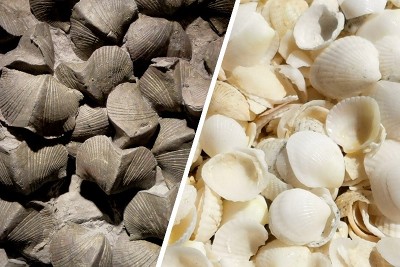
One of the biggest crises in Earth history was marked by a revolution in the shellfish – brachiopods, sometimes called ‘lamp shells’ were replaced everywhere ecologically by the bivalves, such as oysters and clams. This happened as a result of the devastating end-Permian mass extinction which reset the evolution of life 250 million years ago.