
Scientists unlock the molecular secret behind long-lived bat species
Scientists have identified part of the molecular mechanism that gives long-lived bat species their extraordinary lifespans compared to other animals.
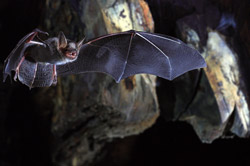
Scientists have identified part of the molecular mechanism that gives long-lived bat species their extraordinary lifespans compared to other animals.

A new computer model mimics Moon dust so well that it could lead to smoother and safer Lunar robot teleoperations.
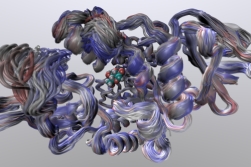
The brilliant physicist Richard Feynman famously said that, in principle, biology can be explained by understanding the wiggling and jiggling of atoms. For the first time, new research from the University of Bristol, UK and the University of Waikoto, New Zealand explains how this ‘wiggling and jiggling’ of the atoms in enzymes – the proteins that make biological reactions happen – is ‘choreographed’ to make them work at a particular temperature.

Researchers from the Universities of Bristol and Southampton, in collaboration with Microsemi, have demonstrated reliable operation of microelectromechanical relays by coating the contacts with nanocrystalline layers of graphite, to enable ultra-low-power electronics for harsh environments.
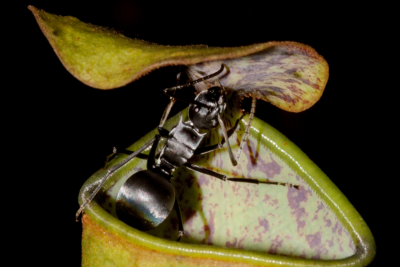
A scientific study of pitcher plants species that use the same complex ‘springboard’ mechanism for insect capture has revealed an explanation for how complex traits requiring multiple components may evolve.

A scientist from the University of Bristol is part of an international team that has shown that the changing topography of ice sheets in the Northern Hemisphere during the last Ice Age forced changes in the climate of Antarctica, a previously undocumented inter-polar climate change mechanism.
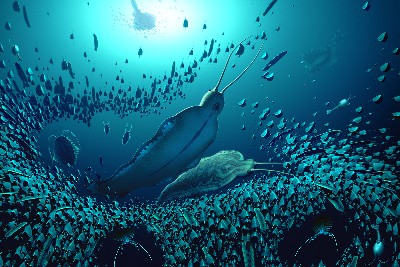
Fossils of a new group of animal predators have been located in the Early Cambrian Sirius Passet fossil locality in North Greenland. These large worms may be some of the earliest carnivorous animals to have colonised the water column more than 518 million years ago, revealing a past dynasty of predators that scientists didn’t know existed.

This year – 2024 – the University of Bristol's Veterinary School is celebrating 75 years of educating veterinary students and advancing veterinary science. From improving livestock welfare to tackling food security and antimicrobial resistance, using artificial intelligence to detect disease and working to conserve highly threatened mammals, Bristol Veterinary School has helped to advance veterinary medicine, animal welfare and health around the world.

Outcomes for patients with blood cancer could be improved in future thanks to a £1.74 million Cancer Research UK award. The University of Bristol-led research, comprising an international team of scientists and clinical academics, will investigate why stem cell transplantation, which is used to treat blood cancers, cures the disease in some patients but can fail or cause severe side effects in others.
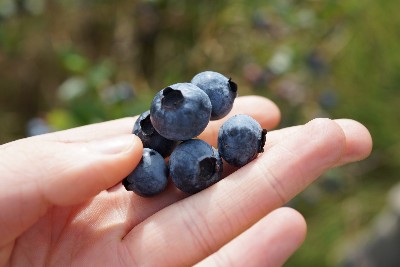
Tiny external structures in the wax coating of blueberries give them their blue colour, researchers at the University of Bristol can reveal.