
First genome of slime eels uncovers the deep evolutionary history of our genomes and bodies
The first genome of hagfish – the only vertebrate lineage without a reference genome - has been sequenced by an international team of scientists.
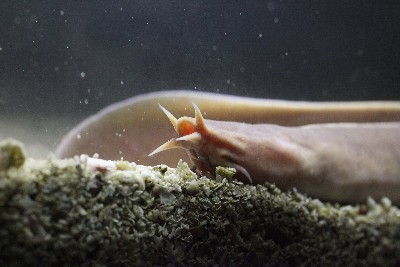
The first genome of hagfish – the only vertebrate lineage without a reference genome - has been sequenced by an international team of scientists.

A new study that will explore the healthcare decisions made in the “best interests” of patients who are unable to make decisions for themselves because they lack mental capacity or competence has been awarded £1.5 million by the Wellcome Trust.

The evolutionary success of the first large predators on land was driven by their need to improve as killers, researchers at the University of Bristol and the Open University suggest.

A possible alternative to traditional batteries has moved a step closer following this week's announcement [Monday 19 March] that Rolls-Royce has signed a collaboration agreement with Superdielectrics Ltd, in partnership with the Universities of Bristol and Surrey, to explore the potential of using polymers to create next generation high energy storage technology.

How does microbial life manage to survive in subglacial environments over millions of years? New research from the University of Bristol has found that the grinding of bedrock by glaciers and ice sheets produces a continual supply of hydrogen gas, a ready source of energy (‘food’) for many microbes. This hydrogen is most likely formed when the highly reactive surfaces of freshly fractured silicate minerals react with and split water.

Rapid-acting antidepressants, including ketamine, scopolamine and psilocybin, have been found to have immediate and lasting positive effects on mood in patients with major depressive disorder but how these effects arise is unknown. New research led by the University of Bristol explored their neuropsychological effects and found that all three of these drugs can modulate affective biases associated with learning and memory.

The University of Bristol's Smart Internet Lab unveiled its world-leading 5G radio models to government and members of the public last weekend [Saturday 17 and Sunday 18 March] at the Layered Realities 5G Showcase.

Using new linguistic analyses, a study, co-authored by the University of Bristol, has shown that the Dravidian languages – spoken by 220 million people across South Asia, date back to about 4,500 years ago.
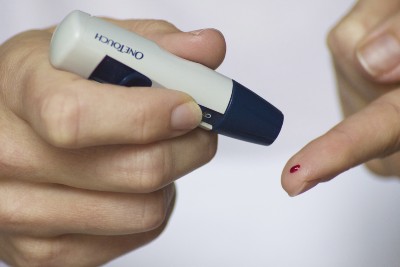
Diabetic patients who take anti-diabetic drugs - known as glitazones – long term had a lower risk of primary and secondary brain cancer compared with diabetic patients on other medications, new research led by the University of Bristol has found.

Diets high in calories, fat and sugar in childhood can cause damage to blood vessel function, known to heighten the risk of early heart attacks and strokes, as early as adolescence according to research funded by the British Heart Foundation (BHF). The team behind the University of Bristol-led study, published in the British Journal of Nutrition today [10 January], say their findings highlight the importance of healthy eating habits throughout life to protect heart health.