
Microscopic sonic screwdriver invented
A team of engineers have created tiny acoustic vortices and used them to grip and spin microscopic particles suspended in water.
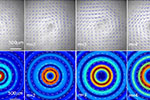
A team of engineers have created tiny acoustic vortices and used them to grip and spin microscopic particles suspended in water.

Does your cat live indoors? Researchers from the University of Bristol Vet School want to hear from indoor cat owners for a new study looking at cats' mobility levels using cat activity monitors.
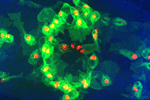
Immune cells play an important role in the upkeep and repair of our bodies, helping us to defend against infection and disease. Until now, how these cells detect a wounded or damaged site has largely remained a mystery. New research, led by University of Bristol academics in collaboration with a team from the University of Sheffield, has identified the triggers which lead these cells to react and respond in cell repair.

A vision for improving rabbit welfare has been set out following research carried out by the University of Bristol’s School of Veterinary Sciences. It is hoped the vision will enable one of Britain’s most popular pets to live healthier and happier lives.
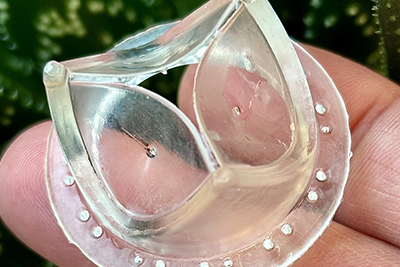
The next generation of an artificial heart valve made from a new plastic material could be a step closer to bedside. The research, led by the Universities of Bristol and Cambridge, demonstrated that the polymer material used to make the new artificial heart valve is safe following implant in an animal model for six months.

The risk of miscarriage varies greatly with a woman's age, shows a strong pattern of recurrence, and is increased after some pregnancy complications, finds a study led by the Bristol Medical School and published in The BMJ today [Wednesday 20 March].

Leading doctors, researchers, and lawyers have joined forces with patient representatives and created the first-ever information guide to better support and protect patients across the world who are considering pioneering, but also potentially risky, surgery.

With GCSE results released this week, and their potential significance, are there any factors that could affect how well students perform? A new study published today [19 August] has found that heavy periods and period pain in teenage girls are linked to lower GCSE grades and more time off school.

A new study is looking for women with acne in Bristol to take part in a new clinical trial. Led by researchers at the Universities of Bristol and Southampton the study will investigate whether a drug called spironolactone can help improve acne in women.

The University of Bristol has successfully retained its HR Excellence in Research Award, after being externally evaluated through the Vitae programme.