
Faculty of Health Sciences

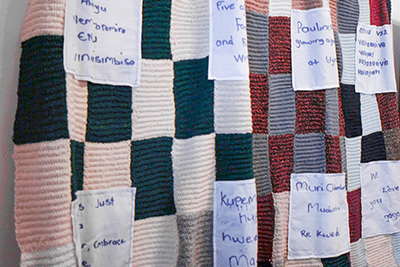
Creative Art of Ageing competition proves hit with Zimbabwe and The Gambia communities

A creative arts competition giving older people in Zimbabwe and The Gambia a platform to express their experiences about ageing saw hundreds of entries showcase their artistic talent across four categories: music, dance, prose, and mixed media from across both countries. The competition, part of a University of Bristol led research project, hopes to improve the health and wellbeing of older people living in sub-Saharan Africa.

An estimated two-thirds of world’s population under age of 50 are infected with herpes simplex virus type 1

More than 3.7 billion people under the age of 50 are infected with herpes simplex virus type 1 (HSV-1), which commonly causes ‘cold sores’ and can also cause genital herpes, according to new research by the University of Bristol and the World Health Organisation [WHO]. The findings, published in the journal PLOS ONE, reveal the first global estimates of HSV-1 infection.

Research could help young people born with cleft lip and palate achieve best outcomes when moving to adult care

Cleft lip and/or palate is a lifelong condition affecting one in 700 births. A new research programme, led by the University of Bristol and thanks to funding of nearly £2 million by the National Institute for Health and Care Research (NIHR), will investigate how ethnicity, sex, socio-economic status, health literacy and geography affect outcomes for young adults born with a cleft. The findings will establish how to address this variation and ensure that all young adults have the same chance of achieving the best possible outcomes.

Global research network to combat deadly Strep A infections

Bristol researchers are part of a newly-launched multi-institution network to research bacterial cause of sepsis and heart damage in children. Each year, around half a million people, including many children and young people, die around the world because of serious group A streptococcal (Strep A) bacterial infections. While most cases are relatively mild – affecting only the skin or throat - some infections can lead to deadly sepsis or autoimmune damage to the heart. There is currently no available vaccine for Strep A.