
Forum to address future world water challenges
A major forum focused on the future of innovation, ecosystems and resilience for water security has been announced today on World Water Day.

A major forum focused on the future of innovation, ecosystems and resilience for water security has been announced today on World Water Day.

Professor Dave Cliff from the University’s Department of Computer Science will present a programme on BBC Four about the world of logic. The programme airs tonight, Tuesday 3 December on BBC Four at 9 pm.

200 secondary school pupils found out last week [Wednesday 27 November] if their team had designed the fastest virtual land speed racer.

A possible alternative to traditional batteries has moved a step closer following this week's announcement [Monday 19 March] that Rolls-Royce has signed a collaboration agreement with Superdielectrics Ltd, in partnership with the Universities of Bristol and Surrey, to explore the potential of using polymers to create next generation high energy storage technology.
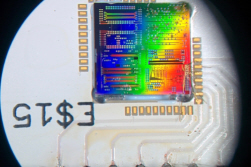
Researchers at the University of Bristol’s Quantum Engineering Technology Labs have demonstrated a new type of silicon chip that can help building and testing quantum computers and could find their way into your mobile phone to secure information.

The University of Bristol's Smart Internet Lab unveiled its world-leading 5G radio models to government and members of the public last weekend [Saturday 17 and Sunday 18 March] at the Layered Realities 5G Showcase.
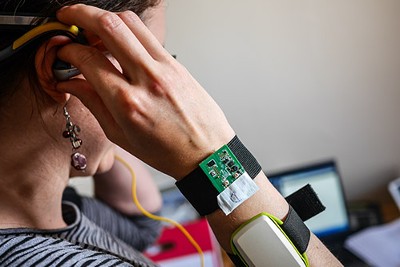
During clinical trials, researchers at the University of Bristol will measure symptoms of Parkinson’s Disease, such as mobility-related activities of daily living, to determine the effectivity of a new drug or treatment.

A new computer model mimics Moon dust so well that it could lead to smoother and safer Lunar robot teleoperations.

A university spin-out company, developing wireless sensors to detect cracks and defects, has received a £489,000 funding boost from the Government.

Researchers from the Universities of Bristol and Southampton, in collaboration with Microsemi, have demonstrated reliable operation of microelectromechanical relays by coating the contacts with nanocrystalline layers of graphite, to enable ultra-low-power electronics for harsh environments.