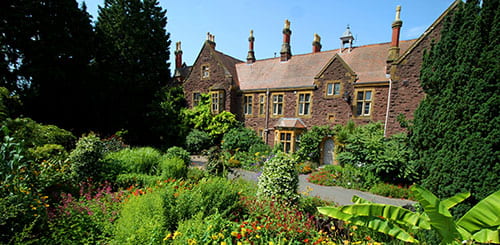
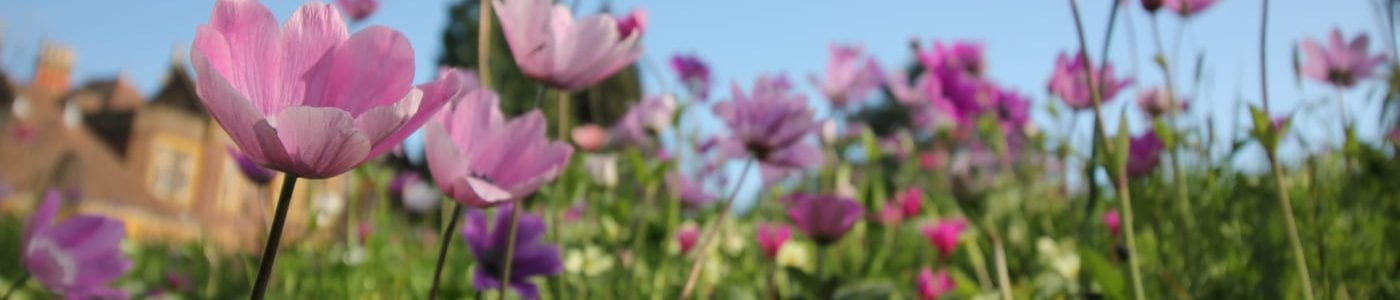
In front of the Holmes, a Victorian mansion now converted into halls of residence, lays a vast herbaceous border featuring plants with hot and fiery colours. As part of the Evolution Collection, this Floral Diversity display is of interest from early summer until late autumn.
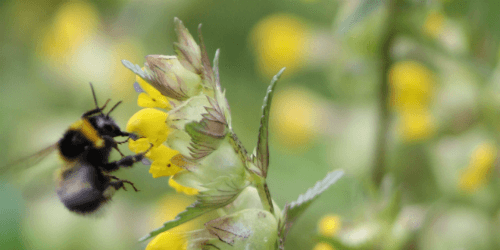
The Pollination display meets you as you enter the garden and arcs around a large pool. The aim of this attractive display is to show the diversity of flower shape and form and the evolutionary adaptations plants use to attract pollinators.
Bristol and the South West are home to a wide variety of plants, some of which are threatened in the wild. From the limestone rocks of the Avon Gorge to the marshlands of the Somerset Levels, this area showcases our flora in all its diversity.
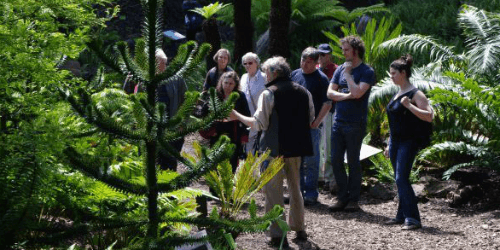
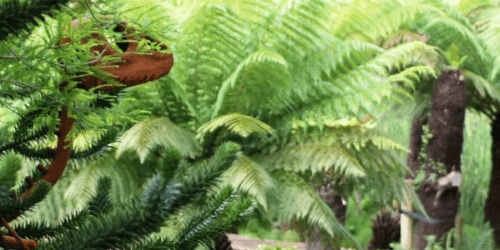
Plants first made their way onto land over 500 million years ago and this display charts the most important stages in plant evolution. The path acts as a timeline taking you through a sunken dell planted with ferns, monkey puzzle trees, horsetails and the famous Wollemi pine.
Set on a south facing bank and arranged by habitat the European Mediterranean display showcases the diverse flora of the Mediterranean basin of Europe and North Africa, from wild rocky slopes of the garigue to domesticated crops both ancient and modern.
As part of our Mediterranean Climate Regions collection, plants from the South West tip of South Africa are grown to show extreme adaptation to a seasonally dry environment. South Africa boasts a diverse flora some of which is reflected in the four areas of this display; with examples of fynbos, renosterveld, shrubby karoo and succulent karoo vegetation.
Designed in line with traditional Chinese medicinal gardens found in the ancient city of Suzhou, our Chinese herb garden grows the largest collection of traditional Chinese medicinal herbs in the UK. This display acts as a forum for cultural exchange of ideas through the Bristol China Partnership and a meeting place where groups such as the Bristol China Partnership can interact between visiting groups from China and local people from the Bristol area.
Building on the traditions of the use of herbal plants in Europe the Western Herb Garden mirrors one of the earliest physic gardens at Padua, Italy. The display is divided into sections highlighting how each plant is traditionally used to treat specific parts of the body such as, nervous system, lungs and heart.
This display represents the latest understanding of the relationships between flowering plants inferred from comparisons of their DNA sequences. Starting with a raised pool that is home to a collection of water lilies, the paths take the form of a family tree showing how all major lineages of flowering plants have evolved.
Vegetables are some of our most important crop plants with many out of season vegetables grown in Mediterranean climate regions. This display highlights some of the most commonly used vegetable plants set out in an attractive display.
Part of our Evolution collection the New Zealand display highlights how many plants use similar adaptations to cope with the challenges of their environment such as predation by wildlife and extremes of climate.
The Glasshouse Warm Temperate Zone is home to plants from the garden’s Evolution Collection and Mediterranean Climate Regions Collection. A central bed featuring plants from the South Africa Cape Floral Kingdom and a fine display of cacti, succulents and carnivorous plants highlight the most extreme forms of adaptation to the environment with a collection from the Canary Isles showing the diversity found in island floras.
When you enter the Sub-tropical Zone you will notice a rise in temperature and humidity. This zone is home to plants from montane forests such as ferns, orchids, bromeliads and begonias. In this zone you will also find cycads, ancient angiosperms, epiphytic and economically important plants.
The temperature rises again on entering the Tropical Zone where you are immediately met by a large raised pool containing a variety of interesting plants such as the giant Amazon water lily, water hyacinth and sacred lotus. Around the edge of this pool grow economically important plants such as cocoa, sugar, vanilla, cinnamon, turmeric and bananas.
Updated 21 November 2012 by Botanic Garden
| Feedback
Postal address: University of Bristol, Botanic Garden, Hollybush Lane, Stoke Bishop, BS9 1JB, UK. Tel: +44 (0)117 331 4906